New AI Capital Trends: Tesla's Q3 2026 AI Investment Strategy Shift, $10 Billion Restructures AI Industry Valuation Logic
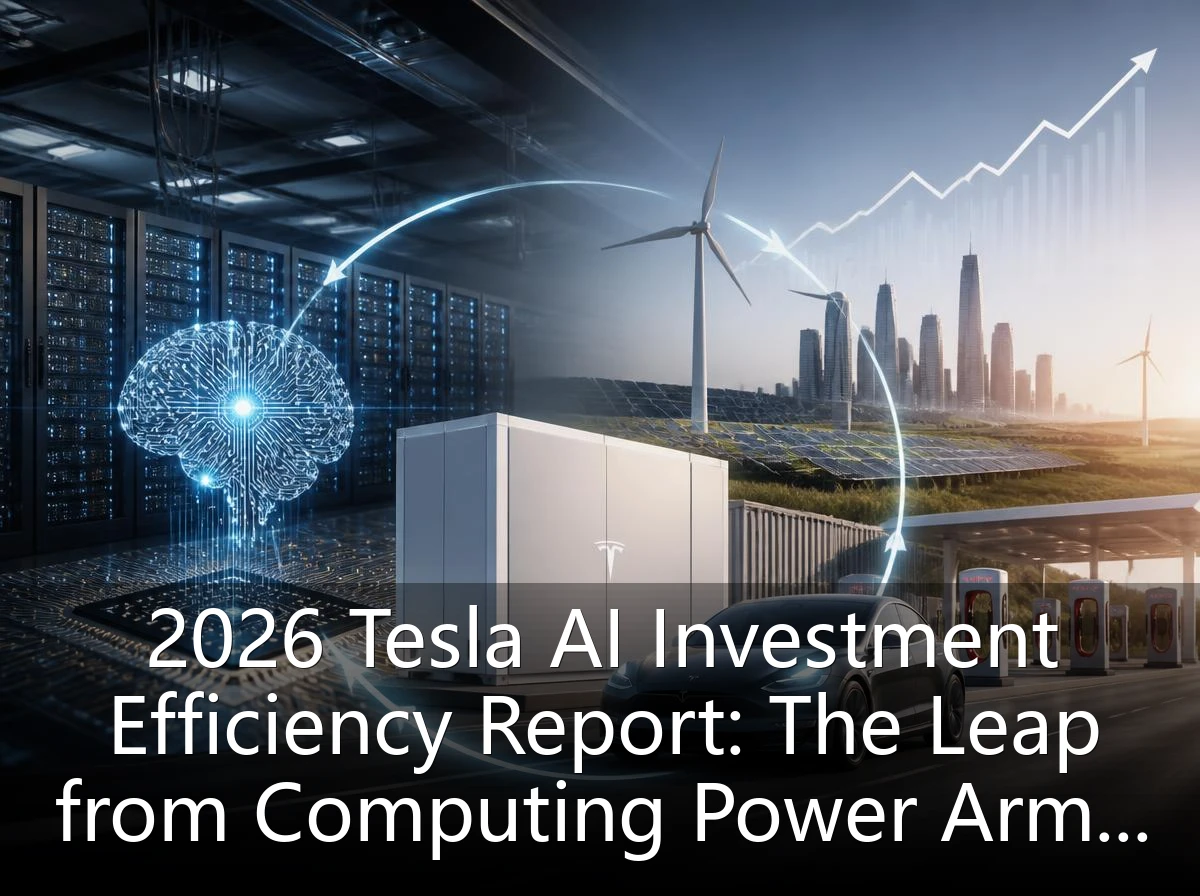
\n\nIn the third quarter of 2026, Tesla's AI investment strategy reached a significant turning point, marking the tech giant's shift from a pure computing power arms race to a more refined capital return rate priority model. This strategic adjustment will not only reshape Tesla's own valuation logic but will profoundly impact the global AI industry's investment landscape and business paths.
\n\nStrategic Shift: From Computing Power Stacking to Capital Efficiency
\n\nAccording to Tesla's latest disclosed investor relations documents, the company significantly adjusted its AI capital allocation strategy in Q3 2026, shifting focus from simply expanding computing power scale to improving capital utilization efficiency. This shift is reflected in several key decisions: on one hand, Tesla slowed down the expansion speed of the Dojo supercomputer, instead optimizing existing computing resources; on the other hand, the company increased its investment proportion in AI commercialization applications, especially the commercialization process of FSD (Full Self-Driving) and Optimus humanoid robots.
\n\nWall Street analysts generally believe that this strategic adjustment reflects Musk and his team's reassessment of the AI investment return cycle. As global AI infrastructure investment becomes saturated, relying solely on computing power scale expansion is no longer sufficient to obtain excess returns. Tesla is shifting to AI application areas with more commercial certainty to achieve faster capital recovery.
\n\nNew Capital Allocation Paradigm: Computing Power as a Service and Data Assetization
\n\nTwo innovative measures launched by Tesla in Q3 are particularly noteworthy: Dojo computing power REIT (Real Estate Investment Trust) and FSD data asset securitization. The former transforms Tesla's AI computing infrastructure into tradable financial products, while the latter transforms autonomous driving data into quantifiable financial assets, creating a brand-new AI value monetization model.
\n\n"Tesla is redefining the boundaries of AI assets," commented a Silicon Valley AI investment expert. "They not only view computing power as a technical resource but transform it into a financial tool; they not only see data as product raw material but build it into a tradable asset class. This dual asset securitization strategy is creating a brand-new AI financial ecosystem."
\n\nData shows that after Dojo computing power REITization, Tesla's computing resource utilization increased by 37%, while attracting significant long-term institutional investment. Meanwhile, FSD data asset securitization has opened a trillion-level intelligent driving financial derivatives market, creating new revenue sources for Tesla.
\n\nAccelerated Commercialization: From Laboratory to Market
\n\nWhile undergoing strategic shifts, Tesla's AI commercialization process also accelerated significantly in Q3 2026. The FSD system's rollout speed in the United States exceeded expectations, with Level 4 autonomous driving commercialization expected nationwide by the end of 2026. This progress has directly driven the valuation reassessment of Tesla's automotive business, with analysts generally upgrading their software service revenue expectations.
\n\nThe Optimus humanoid robot project has also entered the commercial preparation stage. Tesla has reached preliminary cooperation intentions with multiple manufacturing companies, planning for small-scale production in 2027. This progress not only opens up new business growth points for Tesla but may reshape the global manufacturing automation landscape.
\n\n"The real value of Tesla's AI strategy lies in its 'data flywheel' effect," said industry analysts. "With the popularization of FSD and Optimus, Tesla will obtain massive real-world data, which will further optimize its AI models, forming a virtuous cycle. This closed-loop model is a core competitiveness that other competitors find difficult to replicate."
\n\nInvestment Landscape Restructuring: From Tech Stocks to AI Infrastructure Stocks
\n\nTesla's AI investment strategy shift has also triggered institutional investors' portfolio adjustments. Q3 2026 data shows that large institutional investors are gradually reducing their holdings of Tesla's traditional new energy concept stocks while increasing their holdings of its AI infrastructure attributes. This transition shifts Tesla's valuation logic from a traditional automaker to an AI infrastructure provider, earning it higher valuation premiums.
\n\n"Tesla is undergoing an identity reconstruction," said a Wall Street investment bank analyst. "The market no longer sees it merely as an electric vehicle manufacturer but as a tech giant with core AI technology. This cognitive shift has brought significant valuation improvements, especially in the context of increasingly scarce AI infrastructure."
\n\nTesla Effect on Global AI Investment Landscape
\n\nTesla's AI investment strategy shift not only affects its own valuation but has a profound impact on the global AI investment landscape. On one hand, Tesla's Dojo REIT model has inspired other tech giants to explore AI asset financialization paths; on the other hand, its data asset securitization practice provides a brand-new value assessment framework for the AI industry.
\n\nThe global AI venture capital market is forming a new investment logic: shifting from focusing solely on AI technology breakthroughs to emphasizing the implementation capabilities and capital return cycles of AI commercial applications. Tesla's successful practice proves that AI investment requires not only technological foresight but also business feasibility and financial innovation.
\n\nChallenges and Prospects: Balancing Innovation and Returns
\n\nDespite the significant results from Tesla's AI investment strategy shift, it also faces numerous challenges. How to maintain technological innovation while achieving stable returns, how to balance long-term R&D investment with short-term financial performance, and how to respond to the increasingly competitive AI landscape are all issues Tesla needs to continuously address.
\n\nLooking ahead, Tesla's AI strategy evolution path has become clear: building an AI ecosystem closed loop with data as the core, computing power as the foundation, and applications as the driver. In this ecosystem, AI is not just a technical tool but also a financial asset and a source of business model innovation. As this strategy is deeply implemented, Tesla is expected to play a more central role in the global AI industry, creating continuous value for investors.
\n\n"Tesla's AI investment strategy shift marks a major transformation of the AI industry from technology-driven to business-driven," summarized industry experts. "This will not only reshape Tesla's own valuation logic but will lead the global AI investment into a new development phase—from pure computing power competition to more refined capital allocation and commercialization exploration."
\n\nIn this new era of AI capital, Tesla is redefining the boundaries and possibilities of AI investment with its unique strategic vision and innovative practices, pointing the way forward for the entire industry.