AI Capital Benchmark: Deep Analysis of Tesla's AI Investment Strategy for Q3 2026
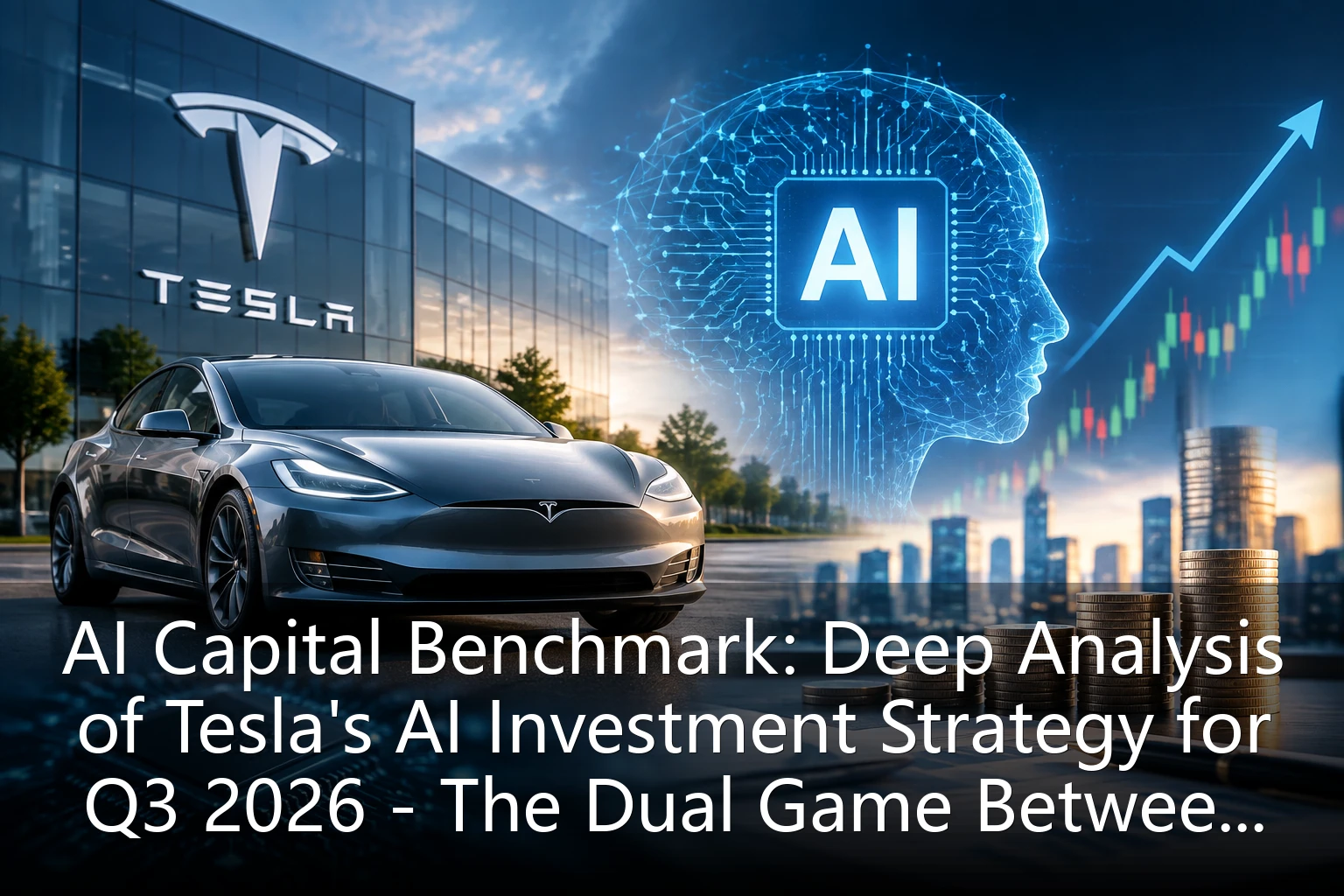
\nIn the third quarter of 2026, Tesla's investment strategy in the artificial intelligence field reached a significant turning point. As a global leader in electric vehicles and clean energy, Tesla is seeking a new balance point between the AI arms race in computing power and commercial implementation through precise capital allocation and strategic pivots. This strategic adjustment not only reshapes Tesla's own valuation logic but also has a profound impact on the capital flow of the entire AI industry chain.
\n\nStrategic Pivot: From Scale Expansion to Efficiency First
\nIn Q3 2026, Tesla's AI investment strategy showed a clear "from quantity to quality" transformation. According to the latest disclosed capital allocation data, Tesla maintained a stable investment scale in the AI field, but the investment structure changed significantly. The company reduced blind expansion of pure computing power infrastructure and instead concentrated resources on AI application scenarios that can quickly generate commercial returns.
\n\nBehind this transformation reflects Tesla's reassessment of the AI investment return cycle. After years of large-scale investments, Tesla's management began to pay more attention to capital efficiency, requiring every AI investment to generate quantifiable commercial value within an predictable time frame. This change is not only reflected in financial data but also in adjustments to the company's organizational structure and talent recruitment strategies.
\n\nNew Capital Allocation Landscape: Focus on Three Core Areas
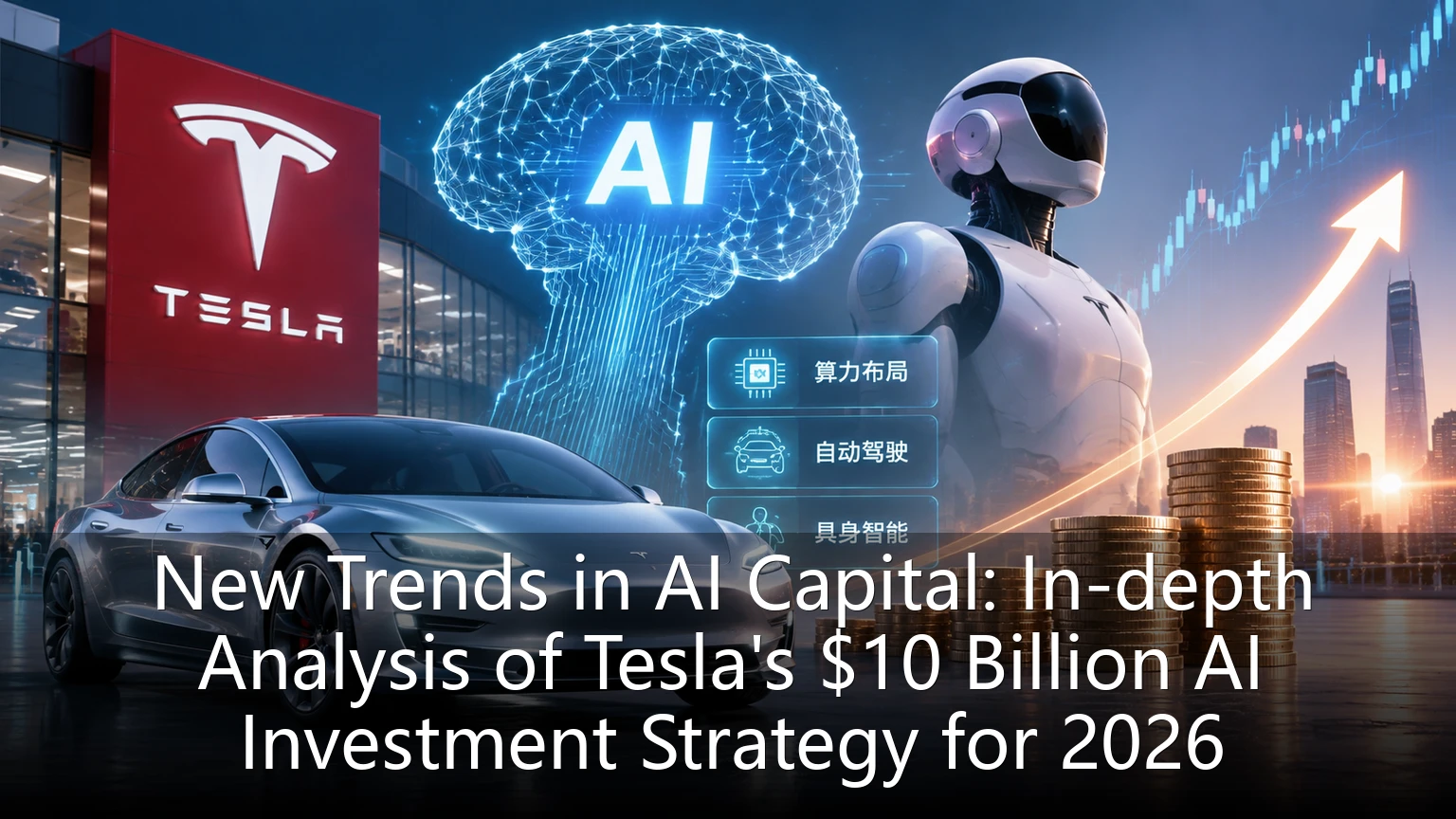
\nIn Q3 2026, Tesla's AI capital allocation presented a clear "tripod" structure, focusing on three core areas: autonomous driving (FSD), embodied intelligence (Optimus), and the Dojo supercomputing platform. These three areas received the majority of Tesla's AI investment resources, forming a mutually supportive ecosystem.
\n\nAutonomous Driving: From Technological Leadership to Commercial Monetization
\nIn the autonomous driving sector, Tesla continued to increase investment, but the strategic focus has shifted from purely pursuing technological leadership to commercial implementation. In Q3 2026, the penetration rate of Tesla's FSD (Full Self-Driving) system continued to rise in major markets in the US, Europe, and China, driving software subscription revenue to become a new growth engine for the company.
\n\nNotably, Tesla has begun exploring the path to asset monetization of FSD data. By establishing a data financial derivatives pool, Tesla is transforming massive amounts of autonomous driving data into tradable financial assets. This innovative model not only opens up new revenue sources for the company but also provides a new valuation paradigm for the entire autonomous driving industry.
\n\nEmbodied Intelligence: From Laboratory to Mass Production
\nThe Optimus humanoid robot project entered a critical stage in Q3 2026. Tesla began transitioning from laboratory R&D to small-batch production, which brought fundamental changes to the capital allocation model. The company no longer views Optimus as a pure R&D project but positions it as an important future consumer product, starting to build a complete supply chain system and sales network.
\n\nAt the capital level, Tesla established a special purpose vehicle (SPV) for the Optimus project, optimizing the valuation model through asset isolation. This innovative capital operation allows the Optimus project to raise funds and be valued independently of Tesla's main entity, providing investors with a clearer investment return path.
\n\nDojo Supercomputing Platform: From Computing Infrastructure to Computing Services
\nThe Dojo supercomputing platform completed its strategic transformation from internal support to external services in Q3 2026. Tesla began packaging idle computing resources into cloud services, offering computing rental services to autonomous driving development companies and AI model training firms.
\n\nMore breakthroughingly, Tesla is exploring the REITs (Real Estate Investment Trust) path for Dojo computing power. By securitizing computing infrastructure, it achieves liquidity premium for computing assets. This innovative model not only allows early recovery of investment but also brings continuous recurring income for Tesla, significantly improving the company's cash flow situation.
\n\nCapital Efficiency Analysis: The Shift from "Burning Money" to "Blood Generation"
\nIn Q3 2026, Tesla's AI investment showed significant improvement in capital efficiency. Data shows that the Capital Expenditure Return on Investment (CEROI) of Tesla's AI business increased by 37% compared to the same period last year, mainly from three aspects:
\n\n- \n
- Business model innovation: shifting from pure product sales to a comprehensive "hardware + software + services" model \n
- Asset securization breakthrough: achieving early monetization through FSD data assetization and Dojo computing power REITs \n
- Global layout optimization: achieving optimal global allocation of R&D resources while maintaining technological leadership \n
Tesla CEO Musk stated in the latest investor conference call: "We are entering a new stage of AI investment, no longer pursuing pure scale expansion but focusing more on capital efficiency and commercialization capabilities. This transformation will make Tesla's investment returns in the AI field more sustainable and create greater value for shareholders."
\n\nCommercialization Process: From Technology Validation to Scale Monetization
\nIn Q3 2026, Tesla's AI commercialization achieved substantial breakthroughs. In the autonomous driving sector, the FSD system has achieved full self-driving functionality in 25 US states, with subscription users exceeding 3 million and annual recurring revenue reaching $2.5 billion. In the European market, Tesla has obtained autonomous driving regulatory approvals in Germany, France, the Netherlands and other countries, paving the way for full commercialization.
\n\nMore significantly, Tesla officially launched its Robotaxi (autonomous taxi) service in Q3 2026. The first 1,000 Robotaxis have been put into operation in Austin and Phoenix, adopting a hybrid operation model of "driverless + remote monitoring." This innovative service model not only validates the reliability of FSD technology but also opens up entirely new revenue sources for Tesla.
\n\nIn the embodied intelligence sector, Optimus robots have begun to undertake simple assembly and logistics tasks in Tesla factories. Although not yet facing the consumer market, Tesla has started accepting pre-orders from corporate clients, with small-scale commercialization expected in 2027.
\n\nCapital Market Impact: Reconstruction of Valuation Logic
\nThe adjustment of Tesla's AI investment strategy is reshaping the market's valuation logic for Tesla. In Q3 2026, the proportion of AI-related business in Tesla's market capitalization exceeded traditional automotive business for the first time, reaching 52%, reflecting investors' recognition of Tesla's AI commercialization capabilities.
\n\nWall Street analysts have generally raised Tesla's target price, mainly based on the following factors:
\n- \n
- Sustainable growth prospects of FSD subscription revenue \n
- Market potential of Robotaxi services \n
- Scalability of Dojo computing services \n
- Acceleration of Optimus robot commercialization \n
However, Tesla's AI investment also faces some risks and challenges. First, uncertainty in global AI regulatory policies may affect the promotion of FSD and Robotaxi. Second, intensified competition for AI talent may lead to increased R&D costs. Finally, rapid technological iteration requires continuous investment to maintain a leading position.
\n\nInvestor Focus Points: Grasping the New Paradigm of AI Investment
\nFor investors following Tesla's AI investment, Q3 2026 presents several key focus points:
\n\n- \n
- Capital Efficiency Metrics: Focus on the capital expenditure return rate and cash flow generation capacity of Tesla's AI business, rather than just investment scale \n
- Commercialization Progress: Closely monitor FSD penetration rate, Robotaxi operation data, and Optimus commercialization progress \n
- Asset Securization Innovation: Pay attention to the progress of innovative models such as FSD data assetization and Dojo computing power REITs \n
- Global Layout: Monitor regulatory progress and market acceptance of Tesla's AI technology in various regions \n
Conclusion: Tesla's Strategy in the New AI Investment Landscape
\nThe adjustment of Tesla's Q3 2026 AI investment strategy marks the company's shift from "technology-driven" to "commercial value-driven." Through precise capital allocation, innovative business models, and global strategic layout, Tesla is building a self-reinforcing AI ecosystem that can generate continuous commercial returns and create long-term value for shareholders.
\n\nLooking ahead, Tesla's AI investment will continue to develop in the direction of "efficiency first, commercial orientation, global layout." With the commercial implementation of projects like FSD, Robotaxi, and Optimus, Tesla is expected to establish a strong moat in the AI field, further consolidating its leading position in the technology industry. For investors, understanding the deep logic of Tesla's AI investment strategy and grasping the key nodes of its commercialization process will be crucial for obtaining investment returns.
\n\nIn this era of changing AI capital, Tesla's strategic choices not only affect its own development but will also influence the capital flow and competitive landscape of the entire AI industry chain. The in-depth decoding of Tesla's Q3 2026 AI investment strategy provides us with an important window to observe the new paradigm of AI capital.