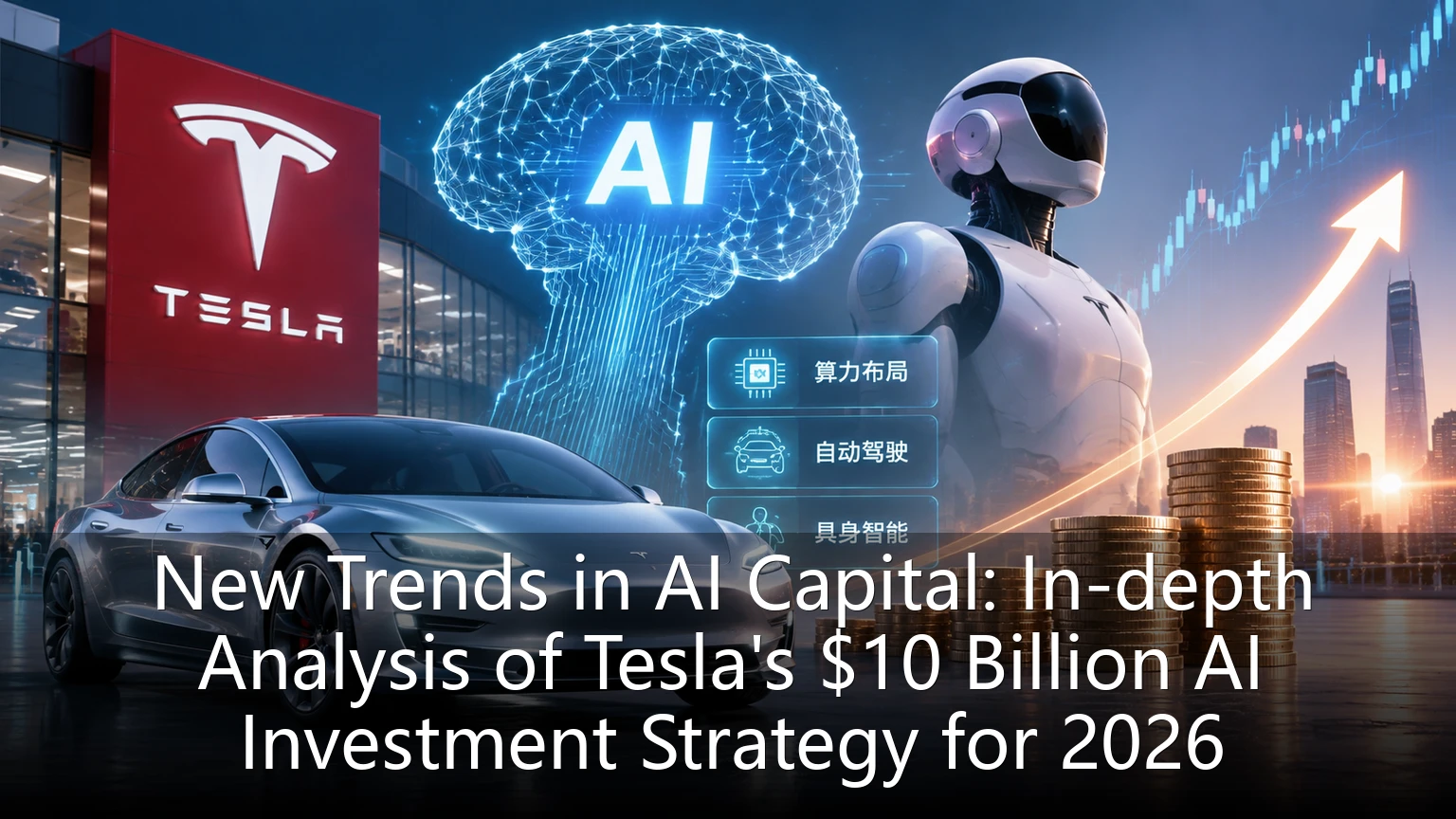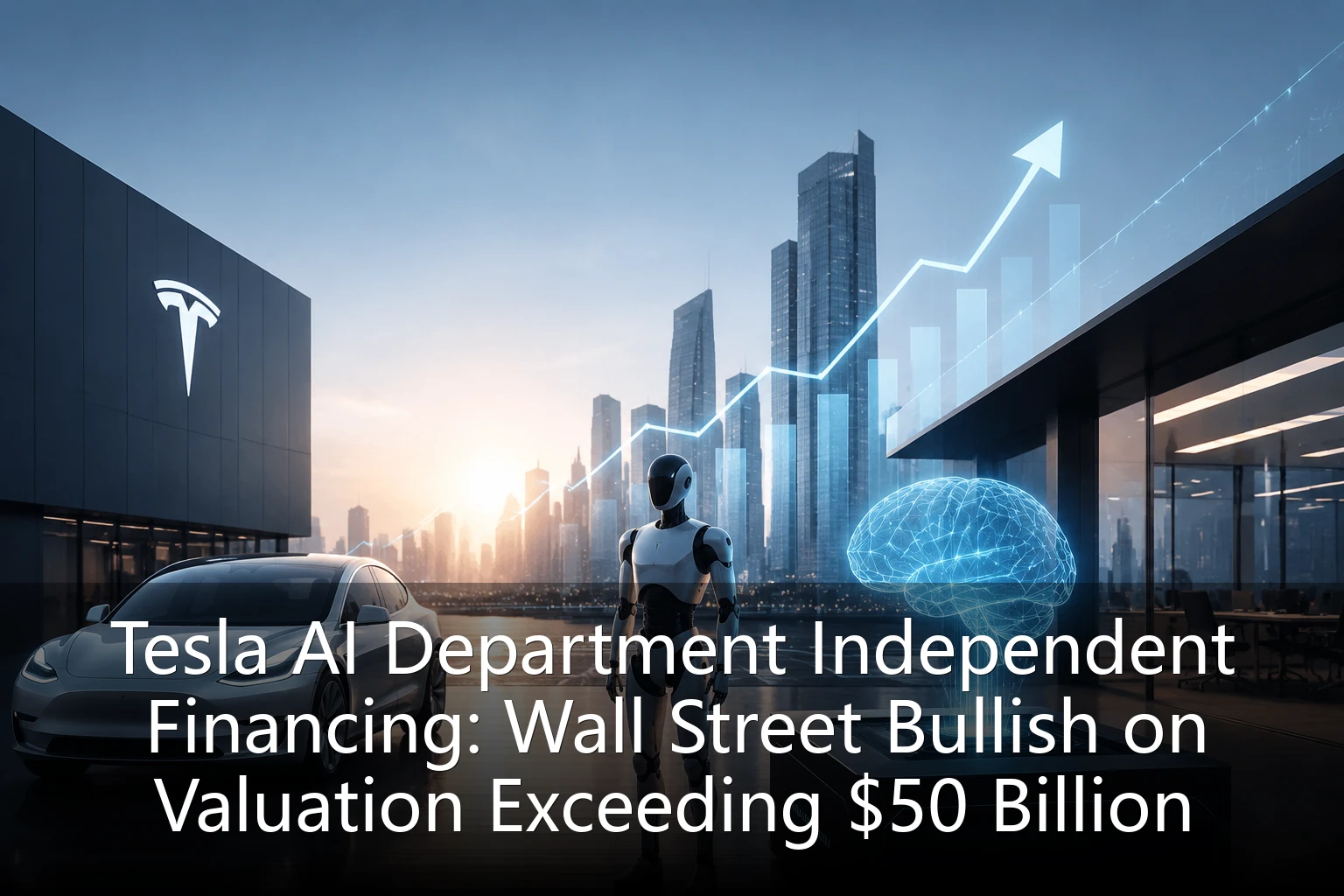
On July 30, 2026, Tesla announced during its second-quarter earnings call that its artificial intelligence (AI) department — encompassing Full Self-Driving (FSD) software, Dojo supercomputer, and humanoid robot Optimus — will undergo independent financing. According to insiders, the financing round has a valuation exceeding $50 billion, attracting multiple top investment institutions including Sequoia Capital, Andreessen Horowitz, and the Saudi Public Investment Fund (PIF). The news quickly ignited the capital market, with Tesla's after-hours stock price rising over 4%.
Strategic Considerations Behind Independent Financing
Tesla CEO Elon Musk stated during the call that the independent operation of the AI department is to "unlock its intrinsic value" and attract long-term capital focused on the AI field. "Tesla's AI business has grown to a scale capable of independently supporting a giant, but the outside world often views it using traditional automaker valuation models. Through independent financing, we can give investors a clearer view of the true value of the AI business."
In fact, Tesla's AI department has invested heavily in recent years. According to previous financial reports, Tesla's AI-related capital expenditures reached $6 billion in the first half of 2026, mainly used for upgrading the Dojo supercomputer, training FSD algorithms, and preparing for mass production of Optimus robots. After independent financing, the AI department will have its own balance sheet and financing channels, enabling more flexible strategic investments while maintaining close synergy with Tesla's automotive business.
Financing Details and Investor Lineup
According to people close to the deal, this round is expected to raise $15 billion to $20 billion, including equity financing and convertible bonds. Sequoia Capital and Andreessen Horowitz each plan to lead with $2 billion, while PIF is considering participation through its sovereign wealth fund. Additionally, Microsoft and Nvidia are also in discussions to invest, aiming to strengthen cooperation in AI computing power and automotive intelligence.
The proceeds will be mainly used for three aspects: first, accelerating FSD regulatory approval and commercial deployment in Europe and Asia; second, expanding the Dojo supercomputer with plans to increase computing power by 10 times; third, advancing Optimus robots into factory trial operations and building a general artificial intelligence (AGI) R&D team.
Wall Street Analysis: Valuation Logic and Potential Impact
Morgan Stanley analyst Adam Jonas released a report stating that the independent valuation of Tesla's AI business at $50 billion is "likely a conservative estimate." He believes that FSD software subscription revenue alone could reach $30 billion annually by 2030, and if Optimus can replace some positions in the labor market, the potential market size exceeds $1 trillion. Independent financing will force the market to reassess Tesla's valuation system, shifting from "automaker + battery" to "AI platform + robot."
Currently, Tesla's total market cap is about $1.2 trillion, with the traditional automotive business valued at approximately $500 billion, energy storage at about $200 billion, and the remaining $500 billion already incorporating some expectations for the AI business. However, after independent financing, the AI business is valued at $50 billion, and the market believes there is still significant room for upward revision. Goldman Sachs, in another report, warned that independent financing may introduce governance complexity and require precautions against conflicts of interest.
Financial Policy and Risk Considerations
This financing has also sparked a rethinking of Tesla's capital structure. Previously, Tesla supported its expansion mainly through internal cash flow and a small amount of bond financing, but the AI department's independent financing means the company is beginning to introduce external equity capital, which may dilute existing shareholders' equity. However, Musk has promised that Tesla's parent company will still hold at least 51% of the AI department's equity to ensure strategic alignment.
Additionally, the U.S. Securities and Exchange Commission (SEC) has begun to pay attention to the disclosure norms of such "internal business spin-off financing." Tesla stated that it will strictly comply with relevant regulations and plans to provide independent financial reports for the AI department in the next quarter.
Impact on the Industry and Outlook
Tesla's AI department independent financing not only changes its own capital narrative but may also reshape the investment landscape of the entire AI and automotive industries. Competitors such as Waymo, Cruise, and General Motors' autonomous driving division may be forced to accelerate their financing pace. At the same time, this move further confirms that AI capital is moving from the "cash-burning phase" to the "value realization phase."
Musk concluded the call by saying: "AI is not a short-term race, but a decades-long journey. Today, we have opened a new chapter for Tesla's AI future." With the funds in place, Tesla will occupy a more important position in the global AI capital benchmark.