Tesla’s Q2 2024 Earnings Call: A Turning Point Toward AI, Autonomy, and Energy Scale
Keywords: Tesla, Q2 2024 earnings, Robotaxi, Full Self-Driving, energy storage, Optimus, AI5 chip, Cybertruck, Shanghai Gigafactory, electric vehicles
Introduction
Tesla’s second-quarter 2024 earnings call sent a clear message to the market: the company is no longer being evaluated solely as an automaker. While vehicle deliveries and revenue remained important indicators of operational strength, the most consequential themes of the quarter were autonomy, artificial intelligence, energy storage, and robotics. In other words, Tesla is increasingly presenting itself as a vertically integrated technology platform built on mobility, compute, and energy infrastructure.
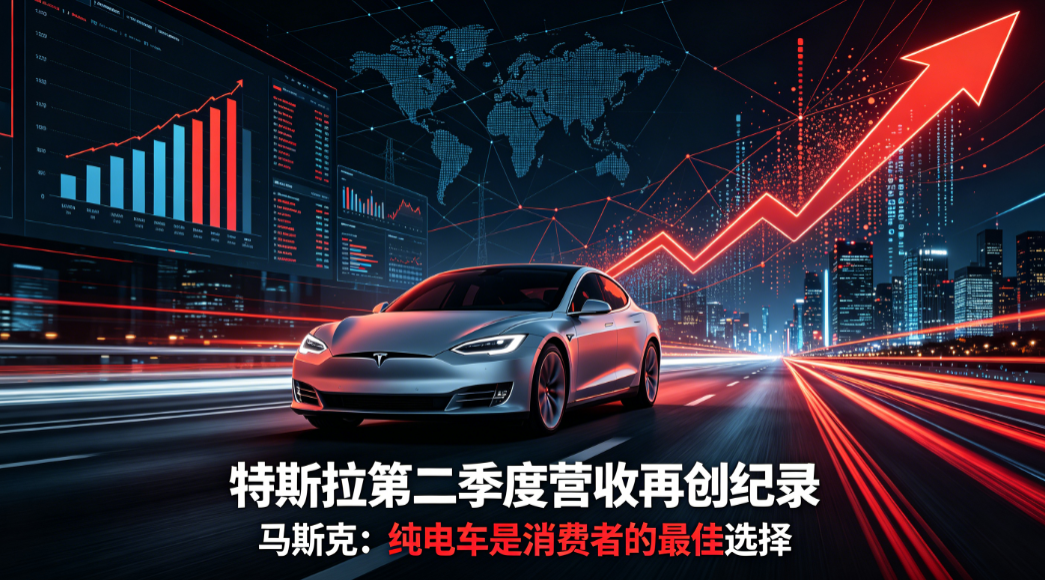
The quarter’s financial results were solid by any conventional industrial standard. Tesla reported record quarterly revenue of $25.5 billion and non-GAAP net income of $1.8 billion. It also delivered more than 444,000 vehicles globally, produced over 410,000 electric vehicles, and achieved a 14.7% sequential increase in deliveries. These figures exceeded Wall Street expectations and suggested that Tesla’s growth engine remains resilient despite a high-interest-rate environment and a still-challenging electric vehicle market.
Yet the deeper significance of the call lies elsewhere. Tesla used the occasion to outline a vision that extends far beyond quarterly vehicle sales. From the scheduled Robotaxi unveiling on October 10 to new progress on FSD, from the rapid expansion of energy storage to the scaling of Optimus and AI infrastructure, the company is laying the groundwork for a new phase of growth. The second quarter may ultimately be remembered as the moment when Tesla’s business narrative shifted more decisively from “EV leader” to “AI-driven physical-world platform.”
Vehicle Business: Recovery, Discipline, and Market Positioning
Tesla’s core vehicle business showed meaningful improvement in the second quarter. Deliveries rose strongly on a sequential basis, and the company’s manufacturing footprint continued to demonstrate global flexibility. The Shanghai Gigafactory remained a central pillar in Tesla’s international operations, with June deliveries reaching 71,007 units and domestic China sales rising to 59,261 units. The company also indicated that the strong momentum extended into July, with the first three weeks in China pointing toward a potential record for the best first month of a quarter in terms of domestic deliveries.
This rebound matters because it reflects more than cyclical recovery. Tesla has been working to sustain demand in an environment characterized by slower EV adoption, elevated financing costs, and intensifying competition. The company responded by extending its five-year zero-interest financing offer through August 31, a move designed to improve affordability and offset the pressure created by high borrowing rates. That decision underscores Tesla’s willingness to use financial engineering, rather than only price cuts, to preserve demand and support order conversion.
More importantly, Tesla’s comments suggested confidence in the underlying long-term case for battery electric vehicles. Elon Musk reiterated that pure EVs are the best choice for consumers, arguing that misconceptions around range, charging, and service will continue to fade as infrastructure improves and the ownership experience becomes more normalized. This is not merely a marketing statement. It is a strategic claim that Tesla still sees the global auto market as early in its electrification cycle, even if growth in some mature markets has temporarily slowed.
The Cybertruck also emerged as a notable positive. In the United States, it became the best-selling model in its segment during the second quarter, while output increased by more than three times sequentially. Tesla said the vehicle is on track to become profitable by the end of 2024. That would be significant, because Cybertruck has long been viewed as a test of Tesla’s ability to scale a highly differentiated product with complex manufacturing requirements. If the company can bring Cybertruck to profitability, it would reinforce confidence in Tesla’s ability to commercialize unconventional products at scale.
Full Self-Driving and the Robotaxi Horizon
If the vehicle business provides Tesla with present-day cash flow, autonomy is the centerpiece of its future valuation story. During the earnings call, Musk confirmed that Tesla’s Robotaxi unveiling is scheduled for October 10, and he suggested that the system may enter use by the end of this year or, at the latest, next year. This timeline is ambitious, but it is consistent with Tesla’s longstanding strategy of pushing autonomy from a software feature into a monetizable transportation platform.
The company also highlighted progress on its supervised Full Self-Driving system, which has received a new version that relies primarily on eye-tracking software to monitor driver attention. Notably, Tesla stated that the system can function even when the driver is wearing sunglasses. This detail may seem minor, but it reflects a broader focus on usability and real-world deployment. A driver-assistance system only scales when it reduces friction, not when it adds complexity. By improving monitoring while preserving convenience, Tesla is trying to make FSD more practical for everyday use.
Tesla also lowered the price of FSD in North America and offered free trials to all customers with the required hardware. This is strategically important. The company is not only attempting to accelerate adoption; it is also collecting more real-world data, improving user familiarity, and establishing a clearer path toward paid subscriptions or one-time purchases. In that sense, FSD is both a product and a learning system.
Musk further suggested that Tesla may obtain FSD approval in other markets as early as the end of this year, specifically mentioning Europe and China. If that happens, it would mark a major milestone. Regulatory approval in those markets would not only unlock incremental revenue, but also validate Tesla’s technical and compliance capabilities in jurisdictions that are often more demanding than the United States. For a company seeking global autonomy deployment, international licensing is as important as technical performance.
The broader implication is clear: Tesla is trying to transform its massive installed base of vehicles into a distributed autonomy network. Each vehicle equipped with AI-capable hardware is a potential node in a future mobility and compute ecosystem. The October Robotaxi event may therefore be less about one product launch than about the next step in Tesla’s attempt to commercialize autonomy at fleet scale.
Energy Storage: The Quiet Growth Engine
While Tesla’s vehicle and AI narratives attract the most attention, its energy storage business is becoming an increasingly important source of growth and margin stability. In the second quarter, Tesla deployed 9.4 gigawatt-hours of energy storage products, up approximately 132% sequentially and a new quarterly record. Revenue and gross profit in the energy segment also reached new highs.
This is strategically meaningful for several reasons. First, energy storage is a recurring demand market tied to utility needs, grid flexibility, renewable integration, and residential backup power. Unlike the auto business, it is less exposed to consumer vehicle replacement cycles and may enjoy different macroeconomic drivers. Second, storage solutions can benefit from Tesla’s manufacturing scale, software, and power electronics expertise. The business is therefore not a side project; it is a natural extension of Tesla’s core competencies.
Powerwall 3 has played a key role in this expansion. The product continues to gain traction in the United States and has now been launched in Canada, the United Kingdom, and Germany. This international rollout suggests Tesla sees residential energy storage as a global category with substantial long-term potential. In a world increasingly concerned with energy resilience, peak electricity pricing, and decentralized power generation, Tesla’s storage portfolio could become a major profit contributor.
What makes the storage business especially attractive is its synergy with Tesla’s broader ecosystem. Solar, battery storage, software optimization, and eventually vehicle-to-grid or distributed compute applications could all reinforce one another. The company’s energy segment may therefore be more than a growth driver; it may become the infrastructure layer that supports Tesla’s AI and robotics ambitions.
4680 Batteries and Cost Reduction
Tesla also reported that 4680 battery production increased by 50% sequentially, while costs continued to decline. This is an important operational signal. The 4680 cell has long been positioned as a cornerstone of Tesla’s long-term manufacturing and cost strategy, but its progress has often been measured in incremental steps rather than dramatic breakthroughs. The latest update suggests that the company is still moving in the right direction.
Battery economics remain central to the EV value proposition. Lower cell cost improves vehicle affordability, raises margins, and expands Tesla’s ability to optimize products for both performance and range. As battery manufacturing improves, the company gains more flexibility across vehicle programs, storage products, and potentially robotics or other embedded systems. Continued cost reduction is especially valuable in a high-rate environment where affordability has become a key determinant of demand.
From a broader investor perspective, the 4680 update matters because it reinforces Tesla’s reputation as a manufacturing innovator rather than simply a software company. While autonomy and AI may dominate the headlines, Tesla’s ability to improve battery cost and output remains foundational to the entire business model.
Optimus and the Rise of Physical AI
Tesla’s humanoid robot project, Optimus, is moving from concept toward operational reality. The company said that second-generation Optimus robots are already performing battery-related tasks in factories. Tesla expects to have thousands of Optimus units working in its factories by the end of 2025 and to begin external customer deliveries in 2026.
This is one of the most ambitious elements of Tesla’s strategy. If successful, Optimus could extend the company’s influence beyond transportation and energy into general-purpose labor automation. The logic is compelling: Tesla already designs hardware, writes software, trains AI models, and operates highly integrated manufacturing environments. A humanoid robot fits naturally into that ecosystem.
Of course, the commercial path remains uncertain. Robotics markets tend to be slower to mature than software markets, and real-world deployment requires reliability, safety, and cost-effectiveness. However, Tesla’s advantage is its ability to deploy robots first in its own facilities, where they can be trained on repeatable, controlled tasks. That gives the company a built-in testing ground and a path to iterative improvement.
If Optimus reaches meaningful scale, the implications could be enormous. It would broaden Tesla’s addressable market beyond cars and batteries into labor substitution and industrial automation. In that scenario, the company would not just sell products; it would sell physical intelligence.
AI5 Chips and Distributed Compute
Another major theme of the call was Tesla’s compute strategy. Musk said that the AI5 chip, expected to begin production by the end of next year, will make distributed compute an obvious choice. In his view, future vehicles will be equipped with AI5 or later chips, and with potentially billions of humans and robots spending time idle, these devices could generate extraordinary amounts of inference compute.
This vision is notable because it reframes Tesla’s hardware base as a future compute network. Cars, robots, and related devices could become connected inference nodes, creating a distributed intelligence layer that complements centralized data centers. If realized, this would place Tesla in a unique position at the intersection of automotive hardware, edge AI, and cloud-scale model deployment.
The planned expansion of Tesla’s Texas Gigafactory further supports this direction. The southern expansion is nearing completion and will house Tesla’s largest Nvidia H100 cluster to date. That signals a serious commitment to large-scale AI training and infrastructure development. In a market where compute capacity has become a strategic asset, Tesla appears determined to build both its own models and its own hardware stack.
This is one reason investors increasingly debate Tesla not simply as a car company but as an AI platform with real-world endpoints. The challenge is execution. The opportunity, however, is massive.
Next-Generation Vehicles and Manufacturing Leverage
Tesla also confirmed that its next-generation vehicle will begin production in the first half of 2025 as planned, and that it can be manufactured on existing production lines. This is significant because it maximizes the use of Tesla’s current installed capacity, which is nearing 3 million units annually, and could enable a 50% increase relative to 2023 output before additional plant investment is required.
This approach reflects Tesla’s longstanding manufacturing philosophy: simplify the product, reduce capital intensity, and extract more output from existing assets before building new ones. If successful, it could improve returns on capital and speed up deployment of lower-cost vehicles. The company has indicated that only after leveraging its current capacity will it invest in new production lines.
That sequencing is smart. In a slower-growth auto environment, disciplined capital allocation matters as much as product innovation. Tesla appears to be combining both.
The Bigger Picture: A Platform Built for Scale
The market reacted to the quarter with renewed interest because Tesla is offering investors a multistage growth story. In the near term, it still relies on vehicles, financing, and operational efficiency. Over the medium term, it is aiming to monetize autonomy through FSD and Robotaxi. Over the longer term, it is building a platform that spans energy storage, robotics, AI infrastructure, and distributed compute.
This layered strategy is why some analysts remain highly optimistic about Tesla’s valuation potential. Ark Invest’s Cathie Wood, for example, has argued that the robotaxi platform could eventually support a roughly tenfold rise in Tesla’s stock price, describing autonomous ride-hailing as an $8 trillion to $10 trillion global revenue opportunity, with platform providers potentially capturing half of that value. Whether such projections prove accurate or not, they underscore how central autonomy has become to Tesla’s investment case.
The crucial point is that Tesla’s future is increasingly tied to software-enabled scalability rather than simple unit growth. Vehicles matter, but they are becoming entry points into a broader ecosystem. Energy storage matters, but it also supports grid resilience and distributed intelligence. Optimus matters, because it may transform Tesla into a robotics company. AI5 matters because it could unify these layers into a single compute architecture.
Conclusion
Tesla’s second-quarter 2024 earnings call was more than a report on quarterly performance. It was a strategic declaration. The company showed that its core vehicle business remains resilient, its energy storage segment is scaling rapidly, and its battery and manufacturing systems continue to improve. At the same time, Tesla made it clear that its long-term identity is being reshaped by autonomy, AI, and robotics.
The scheduled Robotaxi launch, the progress in FSD, the rollout of Optimus, the expansion of energy storage, and the development of AI5 and compute infrastructure all point in the same direction: Tesla is building a platform for physical-world intelligence. The path ahead will not be free of technical, regulatory, or competitive risks. But if Tesla can execute on even part of this roadmap, its next phase of growth could be far larger than the one that made it the world’s best-known EV company.
For investors, customers, and competitors alike, the message from the Q2 call is unmistakable: Tesla is no longer just preparing for the future of mobility. It is trying to define it.