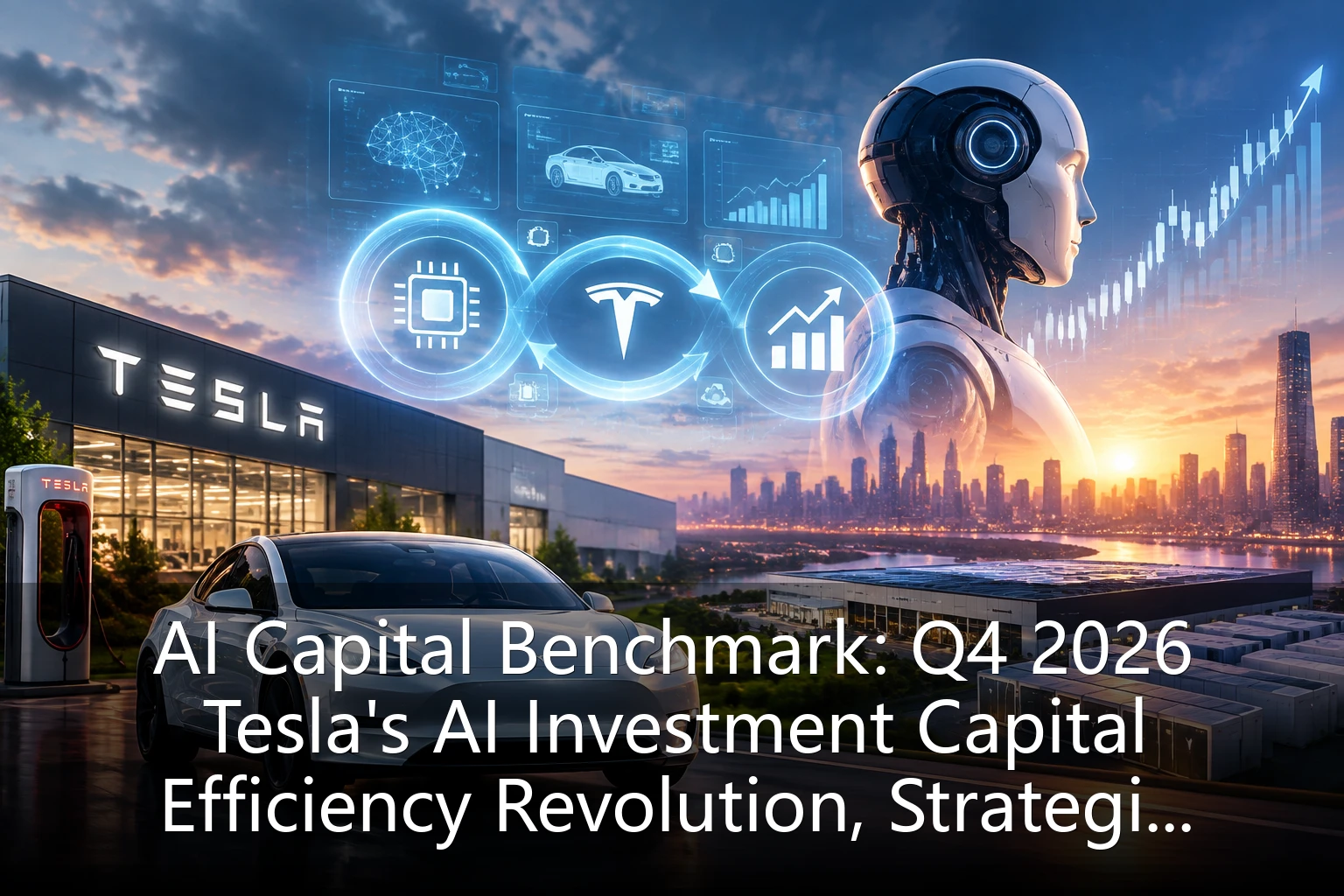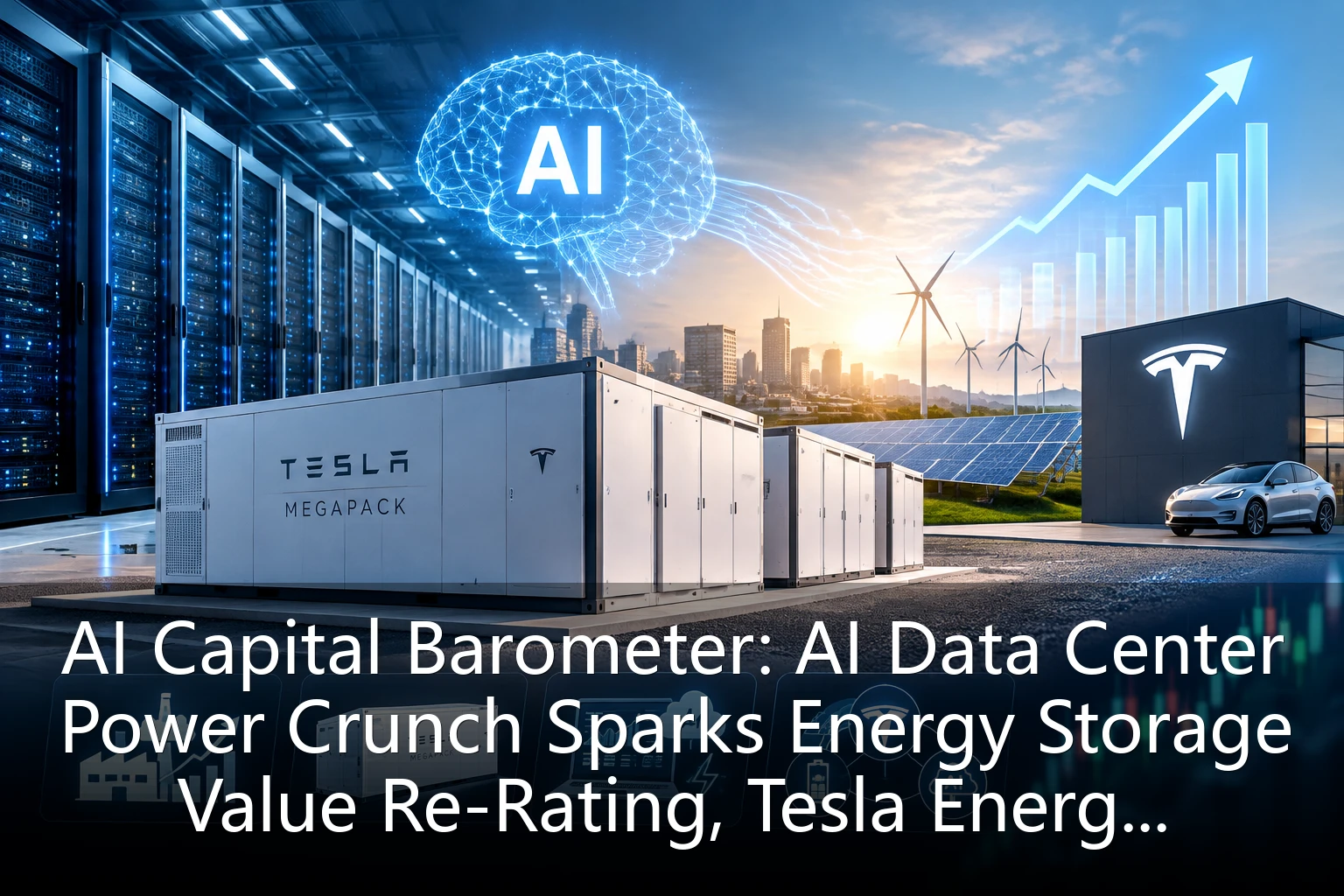
For the past two years, talk about Tesla in capital markets centered almost entirely on autonomous driving and humanoid robots. But entering Q4 2026, a new narrative is quietly warming up in institutional research: the intensifying power hunger of AI data centers is pushing Tesla's energy storage business—long seen as a supporting player—onto the main stage of market valuation. As the Q3 earnings window nears, whether the energy segment's installed capacity and gross margin can keep beating expectations is becoming a new focus of the bull-bear battle.
Power: The AI Era's Scarcest Upstream Resource
The most direct side effect of the large-model arms race is exponential growth in data center power demand. Estimates from the U.S. Lawrence Berkeley National Laboratory suggest data centers' share of U.S. electricity consumption could climb from single digits to as much as about 12% by 2028. In sharp contradiction, building new U.S. transmission lines and clearing interconnection approval routinely takes five to seven years. Hence the deploy-storage-first, wait-for-the-grid-later approach has become tech giants' realistic path to landing AI compute—until grid expansion is done, large-scale electrochemical storage is the shortest route to smoothing load swings and building supply capacity fast.
This structural gap lands exactly at the intersection of Tesla's circle of competence: a top global battery system integrator, with a complete vertical stack from cells and power electronics to energy management software, plus a generate-store-charge loop combining its solar products and charging network. As Wall Street starts looking for the shovel sellers of the AI wave, Tesla's energy segment for the first time has a reason to be priced on its own.
Dual Upgrades in Capacity and Product: Energy Storage's Scaling Inflection Point
Tesla's storage expansion track record is close to a textbook capacity ramp: about 14.7 GWh of storage deployed in 2023, doubling to 31.4 GWh in 2024; the Lathrop, California plant lifting annual capacity toward the 40 GWh level; the Shanghai Megafactory starting production in early 2025 as Tesla's first storage manufacturing base outside the U.S.; and the planned Houston plant expected to join in 2026, moving closer to U.S. domestic data center customers.
The product side is iterating quickly too. The Megapack 3 released in 2025 lifts per-unit capacity to the 5 MWh class, and groups four units into the highly prefabricated Megablock solution, integrating grid-connection equipment such as transformers directly into the container—compressing power plant construction from engineering work into module assembly. For capital-intensive AI data centers, delivery speed is cash-flow speed, and this productized thinking is precisely the core moat separating Tesla from traditional power equipment vendors.
Software and Gross Margin: The Underestimated Profitability Code
The real valuation imagination hides in software and recurring revenue. Tesla's Autobidder platform already runs automated trading and dispatch at storage plants worldwide, turning storage assets from a cost item into a revenue item that can trade in electricity spot and ancillary services markets; the virtual power plant network built on Powerwall aggregates distributed home storage into dispatchable power assets. Sell hardware once, charge for software ongoing—that is the most favored revenue structure in tech-stock valuation frameworks.
Financial data backs this logic as well. The energy segment's gross margin has beaten the core auto business for several consecutive quarters; in a cycle where autos are strained by price competition, storage is playing profit stabilizer. That is why more analysts are arguing for a sum-of-the-parts valuation of Tesla: autos judged on manufacturing, self-driving as an option, and storage deserving a multiple between power equipment and SaaS.
Group Synergy: The Underestimated AI-Energy Flywheel
Synergy within Tesla's ecosystem is often overlooked by outsiders. Musk's xAI Colossus training cluster in Memphis once used Megapacks to cushion the grid impact of compute loads—effectively a stress test of storage value inside the group. As Tesla's own AI training clusters keep scaling, storage assets are both products sold outside and internal infrastructure, and a flywheel of AI consuming power, storage steadying power, and manufacturing replenishing cash is taking shape. In Master Plan Part IV, released in 2025, Musk likewise named sustainable energy alongside AI and robotics as core pillars supporting the company's next stage of growth.
Risks and Watchlist: Clear-Eyed Thinking Behind the Re-Rating Narrative
Of course, the re-rating is not without cracks; investors should track at least four sets of variables:
- Competitive landscape: Chinese vendors are attacking on price and delivery speed; bid prices in overseas markets are under pressure, which could erode storage gross margins;
- Policy variables: adjustments to U.S. clean energy tax credits and supply chain localization requirements could raise cell procurement and compliance costs;
- Capacity execution: the Houston plant's ramp-up progress, Megablock mass-production yields, and order delivery cycles are the litmus test of whether the story is real;
- Disclosure: software revenue from Autobidder and the virtual power plant is not yet reported separately; if management refines the disclosures, it could be the catalyst for a valuation leap.
Standing at the door of Q4 2026, Tesla's valuation story is evolving from how much AI a car company has to how much energy asset an AI company can leverage. For investors, the energy segment's deployment guidance and margin trajectory in the Q3 report may deserve closer frame-by-frame reading than the robot demos at launch events—after all, narratives can serve up pie in the sky, but gigawatt-hours and margins never lie.