Tata Electronics Faces Cybersecurity Scrutiny After Alleged Leak of Apple and Tesla Files
Keywords: Tata Electronics, cybersecurity incident, World Leaks, ransomware, Apple supply chain, Tesla components, data leak, semiconductor manufacturing, India electronics manufacturing, supply chain security
Introduction
Tata Electronics, one of India’s most important emerging players in electronics and semiconductor manufacturing, has confirmed that it recently detected a “cybersecurity incident” affecting some of its systems. The disclosure comes amid claims by security researchers that the ransomware-linked group known as World Leaks has published data allegedly stolen from the company, including files tied to major customers such as Apple and Tesla.
The reported incident is significant not only because of the volume of data allegedly exposed, but also because it touches two of the world’s most closely watched technology and automotive supply chains. For Apple, which relies heavily on precision manufacturing partners across Asia, the breach allegations raise concerns about intellectual property protection, vendor security, and supply chain resilience. For Tesla, the possibility that files related to component designs and manufacturing specifications were exposed adds another layer of complexity to an already data-sensitive production ecosystem.
Tata Electronics has said that it responded immediately after discovering the incident and that its business operations remain unaffected. Apple is reportedly investigating the matter, while Tata has declined to comment on ransom-related questions. Although the full scope of the incident remains unclear, the episode underscores how cyber risks are increasingly becoming operational and strategic risks for global manufacturers.
Allegations of a Large-Scale Data Leak
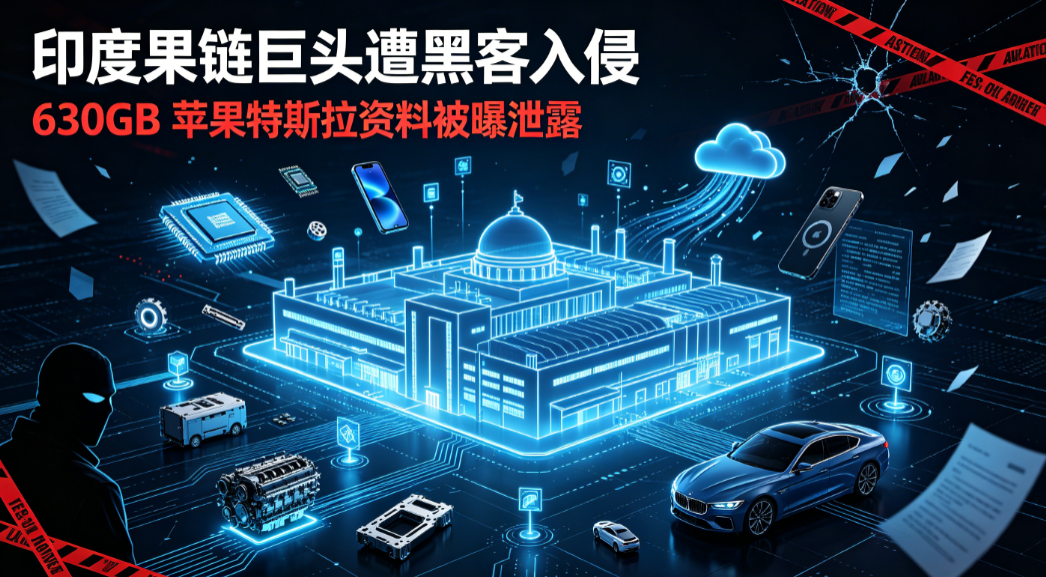
According to reports cited by Reuters and referenced by security researchers, the World Leaks group claims to have published more than 200,000 files totaling over 630 GB of data allegedly sourced from Tata Electronics. The files are said to include materials related to Apple’s and Tesla’s manufacturing supply chains, such as design documents, manufacturing specifications, technical folders, internal emails, event logs, and other sensitive records.
Among the items reportedly identified by researchers were:
- a suspected Apple “factorydata” folder,
- material specification documents,
- emails and incident logs,
- copies of employee passport pages,
- and files linked to Tesla component development, including references to a charging port controller and the Model 3 Highland project.
Some of the Tesla-related files reportedly carried markings such as “confidential business information,” suggesting that at least part of the material may have been intended for restricted internal or partner use.
If verified, the leak would represent more than just an embarrassing security lapse. It could potentially expose proprietary production details, supplier relationships, and process documentation that help define how products are engineered and manufactured at scale. In highly competitive sectors like consumer electronics and electric vehicles, such information can be valuable not only to criminals seeking extortion payments, but also to competitors, counterfeit networks, and industrial intelligence actors.
Why the Incident Matters for Apple
Apple’s manufacturing model depends on a tightly controlled network of suppliers and assembly partners. Over the years, the company has invested heavily in operational discipline, process consistency, and confidentiality across its supply chain. Any indication that files associated with Apple production may have been exposed therefore attracts immediate attention.
Tata Electronics has become increasingly important to Apple’s India strategy. The company entered the iPhone manufacturing space after acquiring Wistron’s India business in 2024, and it later announced the purchase of a 60% stake in the Apple contract manufacturer Pegatron India in 2025, expanding its role in the country’s iPhone production ecosystem. Reuters reported that Tata companies now account for roughly one-third of Apple’s total iPhone output in India.
That scale makes Tata not just another supplier, but a strategic node in Apple’s broader manufacturing diversification effort. India has become central to Apple’s efforts to reduce dependence on China while building a more geographically balanced production footprint. A cybersecurity event at a supplier of this importance therefore matters beyond the immediate technical details. It touches on the trust architecture that underpins Apple’s India expansion.
For Apple, the key concern is not only whether customer data was exposed, but whether any internal production knowledge, quality-control records, engineering specifications, or logistics information could be used to infer product design choices or manufacturing patterns. Even limited disclosure of this kind can create downstream risks, including partner exposure, operational delays, and reputational pressure.
Tesla and the Broader Automotive Technology Angle
The reported Tesla-related files add another layer of interest. Industry reporting suggests that Tata also manufactures parts for Tesla, and in 2024 India’s Economic Times reported that Tesla was believed to have signed a semiconductor chip procurement agreement with Tata Electronics for global operations.
Tesla’s supply chain is highly technology-intensive and increasingly dependent on specialized component sourcing. If files tied to charging systems, vehicle design projects, or semiconductor-related procurement were among those exposed, the implications could extend beyond immediate confidentiality concerns. The automotive sector relies on detailed technical documentation for component validation, safety certification, quality assurance, and manufacturing integration. Exposure of these records could create risks ranging from reverse engineering to commercial intelligence leakage.
Moreover, the convergence of automotive and semiconductor manufacturing makes such incidents especially sensitive. As electric vehicles become more software-defined and electronics-heavy, the boundary between traditional manufacturing security and digital security continues to blur. A breach at a supplier can therefore become a supply-chain vulnerability affecting multiple sectors at once.
Tata Electronics’ Rapid Rise and Strategic Importance
Tata Electronics is a relatively young but fast-growing platform within the Tata Group’s electronics and semiconductor ambitions. Established in 2020, it has quickly become one of India’s most visible industrial bets in advanced manufacturing. The company sits at the intersection of several strategic national and commercial priorities: localization of manufacturing, supply-chain resilience, industrial upgrading, and the development of domestic electronics capability.
India has been actively positioning itself as a global alternative manufacturing base for smartphones, semiconductors, and high-value electronic components. Tata Electronics has played a central role in that shift by deepening its footprint in iPhone supply chains and expanding into other contract manufacturing and component activities.
This makes the cybersecurity incident especially important from a policy and business perspective. When a company is not merely a factory operator but a strategic industrial platform, the consequences of a breach can extend to investor confidence, partner trust, and national industrial policy. If sensitive engineering or production data is compromised, the issue becomes one of ecosystem resilience, not just enterprise IT security.
Tata’s Response and the Question of Resilience
Tata Electronics told Reuters that after discovering a cybersecurity incident affecting some systems several weeks earlier, it had immediately activated its response mechanism. The company said the incident did not affect business operations and that all functions remained normal.
That reassurance is important, but it does not fully resolve the broader concern. In modern manufacturing environments, the line between “systems affected” and “operations disrupted” can be narrow. A company may continue shipping products while still suffering from data exfiltration, internal access compromises, or prolonged forensic and remediation work. In other words, operational continuity does not necessarily mean the absence of material harm.
Tata declined to comment on the reported ransom demand, which is consistent with how many firms handle active or sensitive cyber incidents. However, in the absence of a full public technical report, important questions remain unanswered: which systems were accessed, whether data was truly exfiltrated, what controls failed, and whether customer environments or shared collaboration tools were involved.
The response will likely be judged not only by the speed of containment, but by the depth of post-incident hardening. For a supplier serving companies like Apple and Tesla, trust is built through demonstrable security maturity, transparent escalation, and evidence that lessons have been absorbed into future controls.
A Pattern of Operational Disruption
This is not the first time Tata Group companies have faced severe disruption from external shocks. Reuters noted that Jaguar Land Rover, the Tata-owned British automaker, was hit by a cyberattack last year that forced production lines to stop for as long as six weeks. That episode illustrated how cyber incidents can translate directly into production downtime, supply-chain stress, and financial damage.
Tata Electronics itself has also experienced non-cyber operational disruption. In September 2024, an iPhone component factory in Hosur, Tamil Nadu, reportedly suffered a fire that led to an indefinite production suspension. The company later came under environmental scrutiny over alleged pollution affecting nearby farmland, with regulators warning of possible forced shutdown measures.
Taken together, these episodes reveal an important reality: large-scale manufacturing is vulnerable from multiple directions. Fires, environmental disputes, labor issues, regulatory scrutiny, and cyberattacks all have the potential to interrupt output or complicate expansion. For a company operating at the center of high-profile global supply chains, resilience must therefore be built not only around capacity and cost, but around crisis preparedness across physical, digital, and regulatory domains.
The Larger Lesson for Global Supply Chains
The Tata Electronics incident is part of a broader pattern in which attackers increasingly target suppliers rather than only headline brands. This strategy is effective because suppliers often hold rich technical data, collaborative records, and access pathways to large multinational clients. A breach at one manufacturing partner can expose information across multiple downstream organizations.
For global companies, the lesson is clear: supply-chain security cannot be treated as a contractual formality. It requires continuous validation of cybersecurity standards, strict segmentation of sensitive data, robust incident response planning, and constant monitoring of vendor exposure. As production networks become more digital and more interconnected, the weakest supplier can become the easiest path to high-value information.
The episode also highlights the growing importance of cybersecurity in industrial policy. Countries seeking to attract advanced manufacturing must ensure that their industrial ecosystems are not only scalable and cost-effective, but secure. A single major incident can damage confidence in an entire manufacturing cluster if buyers begin to question the resilience of the surrounding ecosystem.
Conclusion
The alleged leak involving Tata Electronics, Apple, and Tesla is more than a routine cybersecurity headline. It is a reminder that the modern manufacturing economy is built on trust, technical precision, and data discipline. If the reported files are authentic, the incident could have implications for intellectual property protection, supplier governance, and the security expectations placed on high-value manufacturing partners.
Tata Electronics says operations remain normal and that it acted quickly once the incident was discovered. Apple is reportedly reviewing the matter, and the full extent of the alleged exposure has yet to be confirmed publicly. Still, the case has already drawn attention because of who is involved and what is at stake.
As Tata deepens its role in India’s electronics and semiconductor ambitions, its cybersecurity posture will matter as much as its production capacity. In a world where supply chains are increasingly digital, resilience is no longer a back-office issue. It is a core competitive advantage.